
Discussion Practice EAP Activities & Games
The Future of Jobs: AI Tech Takeover?

EAP Discussion Practice Activity - Speaking: Discussion, Preparing and Delivering a Presentation, Freer Practice - Group Work
In this intriguing AI discussion practice activity, students discuss the topic of AI and its impact on jobs in the future and then present their ideas to the class. In groups, students turn over the first...
International Education

EAP Discussion Practice Activity - Reading, Vocabulary and Speaking: Matching, Discussion, Freer and Communicative Practice - Group Work
In this productive international education discussion activity, students learn topic-based vocabulary and discuss questions on the topic of international education...
A Good First Impression

EAP Discussion Activity - Reading, Vocabulary and Speaking: Matching, Discussion, Freer and Communicative Practice - Group Work
In this free discussion activity, students learn topic-based vocabulary and discuss questions on the topic of making a good impression. To begin...
Blind Recruiting

EAP Discussion Practice Activity - Reading, Vocabulary and Speaking: Matching, Discussion, Freer and Communicative Practice - Group Work
In this engaging group discussion activity, students learn topic-based vocabulary and discuss questions on the topic of job interviews and workplace...
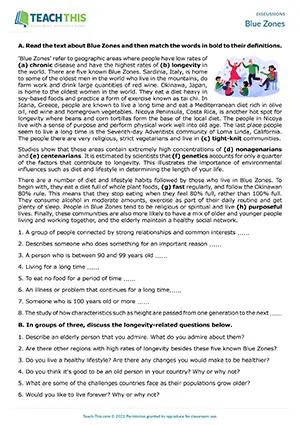
Blue Zones
EAP Discussion Activity - Reading, Vocabulary and Speaking: Matching, Discussion, Freer and Communicative Practice - Group Work
In this insightful lifestyle discussion activity, students learn vocabulary related to longevity and take part in a discussion on the topic of lifestyle and old age. First...
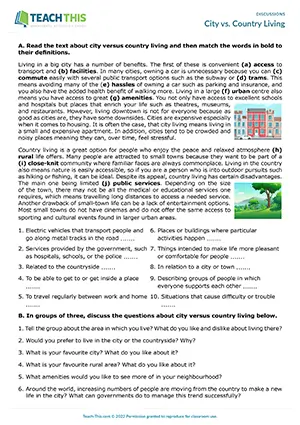
City vs. Country Living
EAP Discussion Practice Activity - Reading, Vocabulary and Speaking: Matching, Discussion, Freer and Communicative Practice - Group Work
In this compelling city vs. countryside discussion activity, students learn vocabulary related to the city and countryside and discuss questions on the topic...
Cryptocurrencies

EAP Discussion Activity - Reading, Vocabulary and Speaking: Matching, Discussion, Freer and Communicative Practice - Group Work
In this thought-provoking cryptocurrencies discussion activity, students learn topic-based vocabulary and discuss questions on the topic of crypto. First, students read...
Discussions Board Game

EAP Discussions Board Game - Speaking: Impromptu Speech, Leading and Participating in Discussions, Communicative Practice - Group Work
This useful discussions practice board game helps students practice impromptu speech and participating in small group discussions. In groups, players take turns...
Economic Development

EAP Discussion Practice Activity - Reading, Vocabulary and Speaking: Matching, Discussion, Freer and Communicative Practice - Group Work
In this economic development discussion activity, students learn topic-based vocabulary and discuss questions on the topic of economic development...
Get the Ball Rolling

EAP Discussion Activity - Reading, Vocabulary and Speaking: Matching, Discussion, Freer and Communicative Practice - Group Work
In this interesting sports discussion activity, students learn advanced sports-related vocabulary and discuss questions on the topic of sports. First, students read...
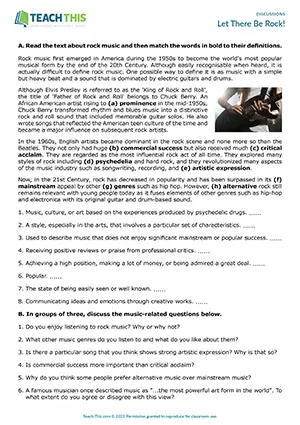
Let There Be Rock!
EAP Discussion Practice Activity - Reading, Vocabulary and Speaking: Matching, Discussion, Freer and Communicative Practice - Group Work
In this fun music discussion activity, students learn topic-based vocabulary and discuss questions on the topic of music. To start, students read a short text...
Movie Magic

EAP Discussion Activity - Reading, Vocabulary and Speaking: Matching, Discussion, Freer and Communicative Practice - Group Work
In this enjoyable movies discussion practice activity, students learn movie genre vocabulary and discuss questions on the topic of movies. To begin, students...
Overtourism

EAP Discussion Practice Activity - Reading, Vocabulary and Speaking: Matching, Discussion, Freer and Communicative Practice - Group Work
In this rewarding tourism discussion activity, students learn tourism-related vocabulary and have a discussion based on the topic of tourism. First, students read...
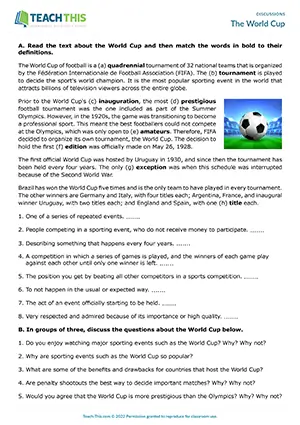
The World Cup
EAP Discussion Activity - Reading, Vocabulary and Speaking: Matching, Discussion, Freer and Communicative Practice - Group Work
In this free World Cup discussion activity, students learn topic-based vocabulary and discuss questions on the topic of the World Cup. To begin, students read...
Urban Transport

EAP Discussion Practice Activity - Reading, Vocabulary and Speaking: Matching, Discussion, Freer and Communicative Practice - Group Work
In this memorable transport discussion activity, students learn urban transport related vocabulary and discuss questions on the topic of transportation. To start...
Understanding Academic Discussions
Academic discussions involve exploring a question together by explaining ideas, considering reasons and responding to other speakers. A productive contribution connects with the conversation and helps the group examine the topic, rather than simply adding another opinion.
This page contains fifteen resources across B1 and B2, including topic-based discussion activities, a discussions board game and a task that develops a discussion into a group presentation. Two activities are available as free downloads.
The table provides example language for participating in and guiding a discussion.
| Discussion skill | Purpose | Example language |
|---|---|---|
| Explain a view | Give listeners a reason they can examine | 'I would favour this option because...' |
| Build on a contribution | Connect a new point to an earlier idea | 'Building on your point about cost, we should also consider...' |
| Ask for clarification | Check meaning before responding | 'When you say access, do you mean cost or availability?' |
| Explore a different view | Question an idea without dismissing the speaker | 'Could there be another explanation for that?' |
| Invite participation | Give another person an opening to contribute | 'Would you like to add a different perspective?' |
| Summarise the discussion | Record agreement and unresolved differences | 'We agree on the aim, but differ on how to achieve it.' |
How to Develop Academic Discussion Skills
Prepare ideas without scripting every turn: Ask students to note a position, a reason and a question before speaking. Short notes provide something to contribute while leaving room to respond to ideas they did not anticipate.
Distinguish experience from evidence: Personal examples can help explain a viewpoint, but they do not establish what happens generally. Encourage students to identify the basis of a claim and acknowledge when further information would be needed.
Review interaction as well as language: After a discussion, ask students to identify a contribution they built on and a question that helped them understand another view. Use these examples to set a specific goal for the next discussion.
3-Step Framework for Teaching Academic Discussions
Develop these skills across successive discussions, moving from supported topic preparation to shared leadership and closer attention to competing perspectives. Use the first stage with B1 learners and extend the sequence with the B2 tasks when appropriate.
1. Prepare language and share responsibility: Students read a text about international education and match its topic words to definitions. They then discuss five questions in groups of three, with everyone leading at least one question. Use this structure to establish that students are responsible for both contributing and helping a discussion move forward.
2. Practice leading more than one exchange: Move to the city versus country living task, where students read a passage, match vocabulary and discuss six questions, leading two each. Ask leaders to practice inviting a contribution and checking its meaning before moving on. Repeated turns allow them to apply feedback from the earlier discussion.
3. Explore perspectives on a shared issue: Students read about tourism in Venice, match vocabulary and take turns leading tourism-related questions. Build on their leadership practice by asking them to connect responses and identify where viewpoints differ. Finish with a brief spoken summary of an agreement and an unresolved issue, without requiring the group to reach a single position.
Common Mistakes with Academic Discussions
Giving disconnected opinions: A relevant idea can still interrupt the development of a discussion if the speaker ignores the preceding contribution. In this hypothetical exchange, a classmate has raised concerns about travel costs. Disconnected response: 'I prefer studying abroad.' Connected response: 'I prefer studying abroad, but your point about travel costs would affect my choice.'
Presenting silence as agreement: A quiet participant may be thinking, uncertain or waiting for an opportunity to speak. Do not include their agreement in a summary without checking. Unsupported summary: 'Nobody objected, so we all agree.' Better approach: 'We have heard support for this option. Does anyone have a different view?'
Common Questions About Teaching Academic Discussions
What game helps students practice leading discussions?
The game Discussions Board Game alternates one-minute talks with three-minute group discussions. A discussion leader card guides students through opening the discussion, inviting contributions, sharing speaking time and bringing it to a close. Taking turns in this role gives students a structured way to practice managing participation as well as speaking.
What free activity helps students practice group discussions?
The activity A Good First Impression prepares students for discussion through a short reading and vocabulary matching. In groups of three, students then discuss six questions about making a good impression, with each person leading two questions. This shared responsibility gives every student opportunities to guide the conversation and contribute ideas.
How can students turn a discussion into a group presentation?
The activity The Future of Jobs: AI Tech Takeover? asks groups to discuss how AI could affect three jobs. Students choose one job, record their ideas and use prompts to prepare a five-minute presentation. Each group member presents a different part, giving the discussion a clear purpose and everyone a speaking role.
Become a Teach This Member
Get unlimited access to the full library, plus new resources added every week.
Unlimited Resource Access
Download from 3000+ worksheets, activities, and games.
Save 5+ Hours Weekly
Cut lesson prep time with ready-to-use resources, plus teacher notes and answer keys.
Trusted Professional Quality
Classroom-tested, editable resources created by experienced ESL professionals.
Fresh Content Weekly
Get 5 new resources added to the library each week.
Here's what our members are saying...


