Find Someone Who…

Intermediate (B1) 40 minutes
EAP study skills activity preview for Intermediate (B1) showing question prompts, discussion, and communicative group practice

EAP Study Skills Activity - Speaking: Asking and Answering Questions, Discussion, Controlled, Freer and Communicative Practice - Group Work

In this study skills speaking activity, students ask and answer questions about the difficulties of managing their academic studies and discuss strategies...

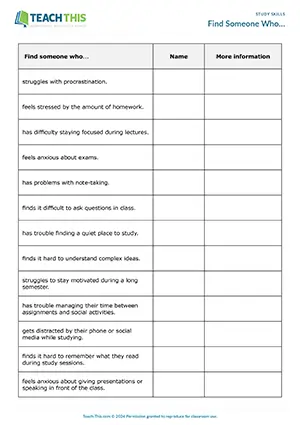
EAP Study Skills Activity - Speaking: Asking and Answering Questions, Discussion, Controlled, Freer and Communicative Practice - Group Work In this study skills Find Someone Who activity, students ask and answer questions about the difficulties of managing their academic studies and discuss strategies for dealing with them. First, students go through the items on the worksheet and form the yes/no questions they need to ask for the activity, e.g. 'Do you struggle with procrastination?' Students then go around the class, asking each other the questions. When a student finds someone who answers 'yes' to a question, they write down that person's name and ask a follow-up question to gain more information, noting down the answer. Students then move on to speak with a new partner. Afterwards, students share their findings with the class. Next, a class survey is conducted to find out how many students face each challenge, and the numbers of students affected are recorded next to each item. In groups, students then discuss the three most common challenges identified from the survey results and brainstorm strategies for overcoming them. Finally, groups share their ideas with the class.

Study Habits Exchange

Intermediate (B1) 40 minutes
EAP study skills activity preview for Intermediate (B1) showing asking and answering questions, giving advice, writing sentences, and communicative pair practice

EAP Study Skills Activity - Speaking and Writing: Asking and Answering Questions, Giving Advice, Writing Sentences, Communicative Practice - Pair Work

In this communicative study skills activity, students discuss their study habits with multiple partners, exchange advice on areas for improvement, and then...

EAP Study Skills Activity - Speaking and Writing: Asking and Answering Questions, Giving Advice, Writing Sentences, Communicative Practice - Pair Work In this communicative study skills activity, students discuss their study habits with multiple partners, exchange advice on areas for improvement, and then select three new habits to implement. First, students answer six questions about their study habits. Next, in pairs, students have five minutes to discuss the questions, sharing habits they are confident about and asking for advice on areas they wish to improve. Students make notes on any useful ideas they hear in a box on their worksheet. Students then change partners and repeat the activity. This continues until students have spoken to four people. Next, students look at the ideas they wrote in the box and reflect on the study habit ideas they discussed. After that, students write three study habits or tips they want to try, explaining when and how they are going to try them. Finally, students share their answers with the class.

Study Skills Roundtable

Intermediate (B1) 30 minutes
EAP study skills activity preview for Intermediate (B1) showing asking and answering questions, guided discussion, freer practice, group work

EAP Study Skills Activity - Speaking: Asking and Answering Questions, Discussion, Freer Practice - Group Work

In this study skills discussion activity, students practice vocabulary related to study skills and discuss their study habits and routines. In groups, students take turns picking up a question card and asking the...

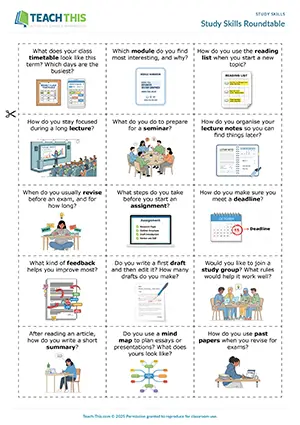
EAP Study Skills Activity - Speaking: Asking and Answering Questions, Discussion, Freer Practice - Group Work In this study skills discussion activity, students practice vocabulary related to study skills and discuss their study habits and routines. In groups, students take turns picking up a question card and asking the other students in the group the study skills question. Each student responds to the question in turn, and the students then discuss the study skills topic. This process continues until all the question cards have been discussed. When the students have finished, review the questions on the cards and elicit answers from around the class.

Time Management Strategies

Intermediate (B1) 45 minutes
EAP study skills worksheet preview for Intermediate (B1) showing time management vocabulary, scenario analysis, and guided discussion

EAP Study Skills Worksheet - Vocabulary, Reading and Writing Exercises: Matching, Writing Paragraphs - Speaking Activity: Discussion - Pair Work

In this informative study skills worksheet, students learn about some practical time management strategies and apply them by recommending solutions...

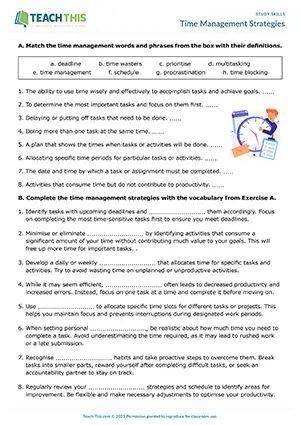
EAP Study Skills Worksheet - Vocabulary, Reading and Writing Exercises: Matching, Writing Paragraphs - Speaking Activity: Discussion - Pair Work In this informative study skills worksheet, students learn about some practical time management strategies and apply them by recommending solutions to common time management problems. First, students match time management words and phrases with their definitions. Students then complete a series of time management strategies with the vocabulary. Next, in pairs, students read and analyse four time management scenarios. Together, the students identify the time management problem each person is facing and recommend and explain an effective solution for each one. Finally, students discuss three time management questions with their partner. When the pairs have finished, they share their ideas with the class.

Types of Learning

Intermediate (B1) 50 minutes
EAP study skills worksheet preview for Intermediate (B1) showing learning types, scenario matching, and presentation activities

EAP Study Skills Worksheet - Reading, Vocabulary and Writing Exercises: Gap-fill, Writing Sentences - Speaking Activities: Discussion, Presentation - Pair Work

In this productive study skills worksheet, students learn about different types of learning and apply that knowledge to reflect and improve on their own...

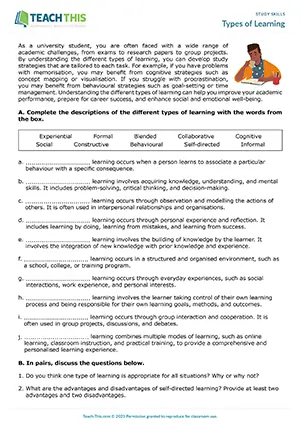
EAP Study Skills Worksheet - Reading, Vocabulary and Writing Exercises: Gap-fill, Writing Sentences - Speaking Activities: Discussion, Presentation - Pair Work In this productive study skills worksheet, students learn about different types of learning and apply that knowledge to reflect and improve on their own learning processes. Students begin by reading a short introduction to learning types. Students then complete descriptions of ten types of learning with vocabulary from a box. Next, students discuss two questions about learning types with a partner and then share their answers with the class. After that, students match the types of learning with scenarios and add another example scenario of their own to each one. In pairs, students then move on to pick a skill or knowledge area they want to improve in. Students then choose one type of learning that they think would be most effective in helping them achieve that goal. Following that, students prepare and present a two-minute presentation where they explain why they chose that type of learning and how they would apply it to their learning process.

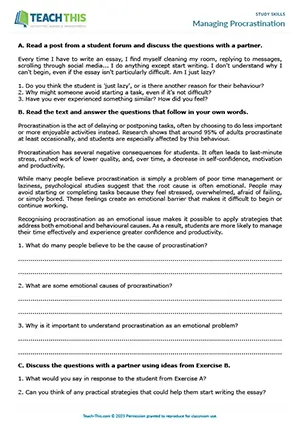
Managing Procrastination

Upper-intermediate (B2) 45 minutes
EAP study skills worksheet preview for Upper-intermediate (B2) showing procrastination causes, management strategies, and personal action planning

EAP Study Skills Worksheet - Reading and Writing Exercises: Matching, Answering Questions, Writing Sentences - Speaking Activity - Pair Work

In this insightful study skills worksheet, students learn about the causes of procrastination, explore strategies to manage it, and create a personal plan to...

EAP Study Skills Worksheet - Reading and Writing Exercises: Matching, Writing Sentences - Speaking Activity: Discussion, Communicative Practice - Pair Work In this insightful study skills worksheet, students learn about the causes of procrastination, explore strategies to manage it, and create a personal plan to reduce procrastination in one area of their academic work. First, students read a post from a student forum and discuss questions with a partner. Next, students read a text about procrastination and answer comprehension questions in their own words. Students then discuss two related questions in pairs. After that, students match procrastination management strategies to their descriptions. Students then think of an academic task they have procrastinated on before and answer questions about it. Finally, students think of strategies to help them manage procrastination for their chosen task and write a paragraph about how they will implement them.

SMART Goals

Upper-intermediate (B2) 25 minutes
EAP study skills worksheet preview for Upper-intermediate (B2) showing self-assessment, SMART goal creation, and improvement planning

EAP Study Skills Worksheet - Reading and Writing Exercises: Rating, Gap-fill, Writing Sentences from Prompts

In this handy study skills worksheet, students conduct a self-assessment of their study skills and set practical and achievable SMART goals for improvement. Students begin by reading a series of statements...

EAP Study Skills Worksheet - Reading and Writing Exercises: Rating, Gap-fill, Writing Sentences from Prompts In this handy study skills worksheet, students conduct a self-assessment of their study skills and set practical and achievable SMART goals for improvement. Students begin by reading a series of statements, each grouped according to key macro study skills essential for success in tertiary-level academic study. Students then rate how often they engage in each behavior using the provided Likert scale. Next, students complete SMART goals for improving two study skills with words from a box. Finally, students choose a study skill they rated themselves poorly in the self-assessment and create their own SMART goals using the completed models as a guide.

Spaced Repetition and Review Strategies
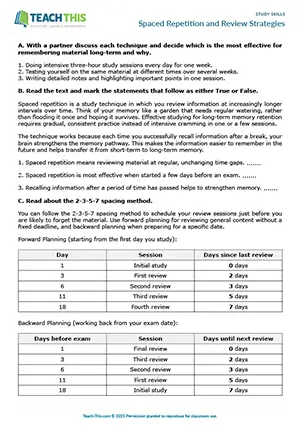
Upper-intermediate (B2) 45 minutes
EAP study skills worksheet preview for Upper-intermediate (B2) showing spaced repetition, and review strategies, and creating personalised study plans

EAP Study Skills Worksheet - Reading and Writing Exercises: Identifying, True or False, Table Completion, Matching - Speaking Activity: Discussion - Pair Work

In this useful study skills worksheet, students learn about spaced repetition and the 2-3-5-7 spacing method and practice planning and reviewing study sessions...

EAP Study Skills Worksheet - Reading and Writing Exercises: True or False, Table Completion - Speaking Activity: Discussion, Communicative Practice - Pair Work In this useful study skills worksheet, students learn about spaced repetition and the 2-3-5-7 spacing method and practice planning and reviewing study sessions using effective review strategies. First, students read about three review techniques and discuss which is the most effective for long-term memory and why. Students then read a text about spaced repetition and mark statements as true or false. Next, students read an explanation of the 2-3-5-7 spacing method and complete the dates in a study plan table using backward planning. After that, students match review strategies to their descriptions. Students then move on to discuss questions about the strategies in pairs. Next, students choose a topic they wish to improve or need to review for an exam. Students then use the 2-3-5-7 method to create a table with five study sessions, writing the date, session number and study method. Finally, students compare plans in pairs, explaining their topic and strategy choices.

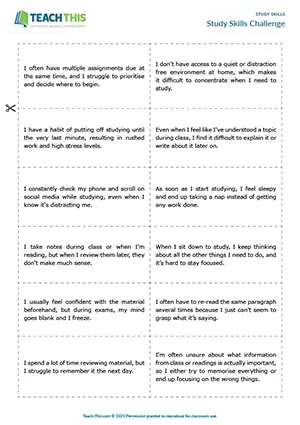
Study Skills Challenge

Upper-intermediate (B2) 40 minutes
EAP study skills game preview for Upper-intermediate (B2) showing discussion, problem solving, and advice giving activities

EAP Study Skills Game - Speaking: Discussion, Problem Solving, Giving Advice, Communicative Practice

In this enjoyable study skills game, students discuss common study problems and share practical strategies to solve them. First, in pairs, students take turns turning over a study problem card and reading...

EAP Study Skills Game - Speaking: Discussion, Problem-solving, Giving Advice, Communicative Practice In this enjoyable study skills game, students discuss common study problems and share practical strategies to solve them. First, in pairs, students take turns turning over a study problem card and reading it aloud. Next, the two students discuss possible strategies to solve the problem. Pairs discuss as many problem cards as they can in ten minutes. After that, students make new groups of four. Students then take turns picking up a study problem card, reading it aloud and asking the group how to solve the issue. The other students then each offer a possible strategy to deal with the study problem using the ideas generated during the pair discussion or by picking up a prompt card for help. The student with the problem card listens and awards the card to the person whose strategy they like most. If a student draws a prompt card, they use the guiding questions to help think of possible solutions. Players can only draw a maximum of three prompt cards during the entire game. Play continues until all the problem cards have been used. The student who collects the most problem cards by giving the best strategies wins the game.

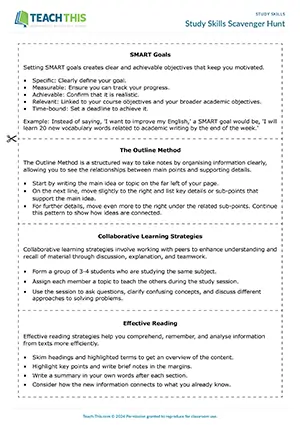
Study Skills Scavenger Hunt

Upper-intermediate (B2) 35 minutes
EAP study skills game preview for Upper-intermediate (B2) showing scavenger hunt, comprehension questions, and paragraph writing activities

EAP Study Skills Game - Reading and Writing: Scavenger Hunt, Answering Comprehension Questions, Writing Paragraphs - Pair Work

Here is an engaging study skills scavenger hunt game to help students learn about effective study skills. In teams of two, students have 20 minutes to...

EAP Study Skills Game - Reading and Writing: Scavenger Hunt, Answering Comprehension Questions, Writing Paragraphs - Pair Work Here is an engaging study skills scavenger hunt game to help students learn about effective study skills. In teams of two, students have 20 minutes to answer questions by reading study skills information cards posted up around the classroom that cover different topics. When the time limit has been reached, teams swap worksheets for marking. For questions worth two points, answers must include two specific details. For questions worth three points, students must provide a clear answer that shows an understanding of the concept and details. The team with the most points at the end of the game wins.

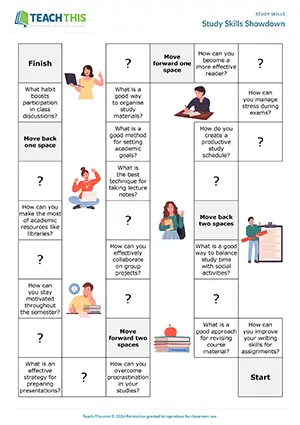
Study Skills Showdown

Upper-intermediate (B2) 25 minutes
EAP study skills board game preview for Upper-intermediate (B2) showing impromptu speech, multiple-choice questions, and group practice

EAP Study Skills Board Game - Vocabulary and Speaking: Impromptu Speech, Multiple-Choice Questions, Communicative Practice - Group Work

This free study skills board game helps students practice talking about study skills and habits. Players take turns rolling the dice and moving their counter...

EAP Study Skills Board Game - Vocabulary and Speaking: Impromptu Speech, Multiple-Choice Questions, Communicative Practice - Group Work This free study skills board game helps students practice talking about study skills and habits. Players take turns rolling the dice and moving their counter along the board. If a player lands on a 'Question' square, they answer the question and talk about the study skills topic for 30 seconds without stopping. If a player can't think of anything to say or stops talking before the 30 seconds are up, they go back two squares. If a player lands on a 'Question Mark' square, another student picks up a card and reads out the study skills question along with three possible multiple-choice answers. The player then chooses an answer. If it's correct, the player stays on the square. If not, they move their counter back two squares. The first player to reach the finish wins the game.

Understanding Academic Study Skills

Academic study skills help students organise their work, choose suitable learning strategies and review their progress. A practical study plan connects a specific goal with actions that fit the task, the time available and the student's circumstances.

This page contains eleven resources across B1 and B2, including worksheets, discussion activities and games on study habits, time management, procrastination, goal setting and review planning. One board game is available as a free download.

The table illustrates how students can turn broad intentions into actions they can try and review. Adapt these examples rather than treating one routine as suitable for everyone.

Study skillPurposeExample action
Set a specific goal Define a manageable outcome 'By Friday, I will draft an outline with three supporting points.'
Break down a task Make the next step clear 'First, I will read the question and list what it asks me to do.'
Plan available time Fit work around commitments and deadlines 'I will reserve thirty minutes after class to organise my notes.'
Identify an obstacle Choose a response suited to the difficulty 'I keep delaying this task because I am unsure about the instructions; I will ask for clarification.'
Schedule review Plan opportunities to revisit material 'I will add review sessions to my calendar before the assessment.'
Evaluate a strategy Decide what to retain or adjust 'At the end of the week, I will compare what I planned with what I completed.'

How to Develop Academic Study Skills

Start with a concrete difficulty: Ask students to identify a task or routine they want to improve. Explore what makes it difficult before recommending a strategy, since unclear instructions, competing commitments and an unrealistic workload require different responses.

Match the approach to the task: Discuss what students need to do, such as remember vocabulary, explain a concept or prepare an essay. Choose activities that serve that purpose rather than assigning students a fixed learning type or assuming that their preferred method is always the most suitable.

Review results without blame: Ask what students tried, what happened and what they would change. Treat a plan that did not work as information about the task and circumstances, rather than evidence that a student lacks motivation.

3-Step Framework for Teaching Study Skills

Use this B2 sequence across suitable lessons to connect self-assessment, responses to obstacles and a practical study schedule.

1. Choose a goal from self-assessment: Students rate their study behaviours, complete model SMART goals and write goals for an area they rated less positively. Ask them to identify an achievable action and a way to check progress, giving the later planning work a specific focus.

2. Plan a response to an obstacle: Students read a forum post and a text about procrastination, discuss the ideas and match management strategies to descriptions. They then examine a task they previously delayed and write how they will apply selected strategies. Connect this reflection to the earlier goal so that the plan addresses a likely barrier.

3. Schedule and explain review choices: Students examine review techniques, read about spaced repetition and complete a backward-planning table using the worksheet's spacing method. They then create a five-session plan for a chosen topic and compare plans with a partner. Treat the model schedule as a planning exercise that students can adjust to their deadline, progress and other commitments.

Common Mistakes with Academic Study Skills

Setting an intention without an action: A broad ambition does not show when or how work will begin. Vague plan: 'I will study harder.' Actionable plan: 'After Tuesday's class, I will spend twenty minutes reviewing the notes and listing two questions to clarify.'

Repeating a strategy without checking its usefulness: Time spent on an activity alone does not show whether it met the study goal. Unsupported conclusion: 'I reread the chapter for an hour, so I must understand it.' Better check: 'I will explain the main idea in my own words, then compare my explanation with the chapter and review any gaps.'

Common Questions About Teaching Study Skills

What activity helps students improve their study habits?

The activity Study Habits Exchange has students discuss their routines with four partners and collect practical advice. They then choose three habits or tips to try and explain when and how they will use them. This turns the conversation into a concrete plan based on ideas students have considered with classmates.

What worksheet helps teach time management for studying?

The worksheet Time Management Strategies introduces relevant vocabulary and practical approaches before students examine four scenarios. Pairs identify each person's time management problem, recommend a solution and explain their reasoning. Discussing further questions then gives students an opportunity to connect the strategies with their own circumstances rather than treating every problem alike.

What free game helps students practice talking about study skills?

The board game Study Skills Showdown combines thirty-second responses about study skills and habits with multiple-choice questions. Students move around the board, answering the questions they land on and checking responses to the question cards. The two formats give students practice explaining their ideas as well as reviewing study skills knowledge.

Become a Teach This Member

Get unlimited access to the full library, plus new resources added every week.

Unlimited Resource Access

Download from 3000+ worksheets, activities, and games.

Save 5+ Hours Weekly

Cut lesson prep time with ready-to-use resources, plus teacher notes and answer keys.

Trusted Professional Quality

Classroom-tested, editable resources created by experienced ESL professionals.

Fresh Content Weekly

Get 5 new resources added to the library each week.

Join Now Just $29.99 quarterly