
TV & Film ESL Activities, Games, Lessons & Worksheets
Lights, Camera, Communicate!

ESL Film and Cinema Board Game - Vocabulary and Speaking: Impromptu Speech, Communicative Practice - Group Work
This communicative film and cinema board game helps students practice talking about films and going to the cinema. In groups, students take turns rolling...
What's on TV tonight?

ESL TV Programmes Activity - Speaking: Information Gap, Asking and Answering Questions - Pair Work
In this useful TV guide information gap activity, students learn about different types of TV programmes by asking and answering questions about what's on TV. In pairs, students complete missing...
Film Genres
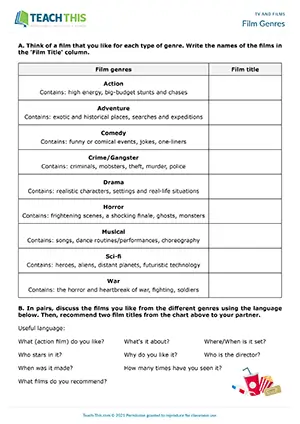
ESL Film Genres Activity - Vocabulary and Speaking: Table Completion, Asking and Answering Questions, Recommending, Controlled and Freer Practice - Pair Work
In this productive film genres discussion activity, students learn about different types of film genres and discuss and recommend films. First, students think of...
Movie Conversation Questions
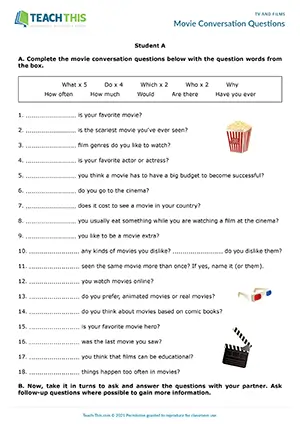
ESL Movie Conversation Questions Activity - Vocabulary and Speaking: Gap-fill, Asking and Answering Questions, Controlled and Freer Practice - Group and Pair Work
In this free talking about films activity, students complete questions about films with question words and then ask and answer the questions with a partner...
Movie Review
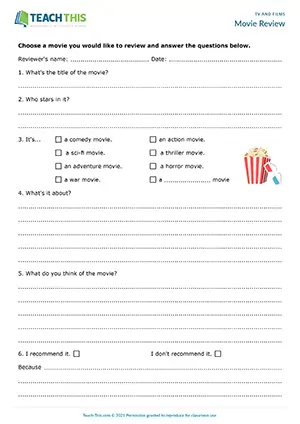
ESL Movie Review Activity - Vocabulary, Reading and Writing Exercises: Matching, Short Answer Questions - Speaking Activity: Discussing Opinions - Group Work
In this engaging movie review activity, students learn film vocabulary and then write and discuss movie reviews. Students begin by matching sentence halves...
Talking about Films

ESL Film and Cinema Lesson - Vocabulary Exercises: Matching, Sentence Completion, Gap-fill, Short Answer Questions - Speaking Activity: Discussion - Group Work
In this insightful film and cinema lesson, students learn vocabulary related to films and film genres and practice talking about movies. Students begin by matching...
Talking about TV
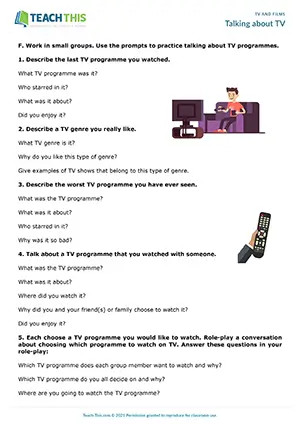
ESL TV Programmes Lesson - Vocabulary Exercises: Matching, Sentence Completion, Gap-fill, Short Answer Questions - Speaking Activity: Discussion - Group Work
In this comprehensive TV programmes lesson, students learn vocabulary related to TV and TV genres and practice talking about TV programmes. To begin, students...
TV and Film Question Time
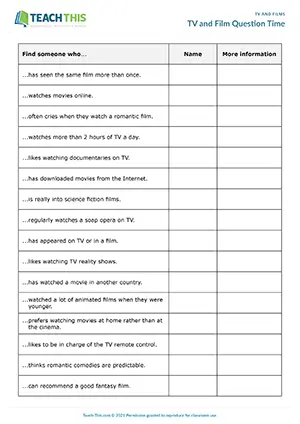
ESL TV and Film Activity - Speaking: Asking and Answering Questions, Controlled and Freer Practice
In this handy TV and film speaking activity, students practice asking and answering questions about TV programmes, films and cinema. Students begin by preparing yes/no questions about TV programmes...
Behind the Scenes

ESL TV and Film Game - Vocabulary: Guessing - Pair Work
In this fun TV and film vocabulary game, students guess the names of people involved in TV and film productions from clues. In pairs, students take turns picking up a card and reading the clue for three points to their partner, who listens and...
Film Review
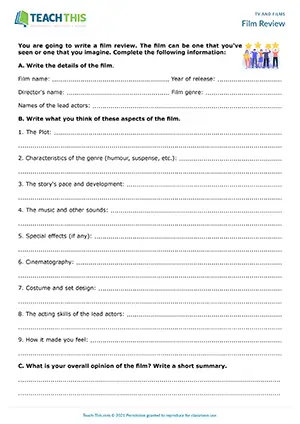
ESL Film Review Worksheet - Writing Exercises: Form Completion, Writing Sentences, Writing a Summary and Review
In this interesting film review worksheet, students learn what goes in a film review and practice writing one. This activity is well suited to follow a class film viewing. First, students think of a film...
The Movie Pitch
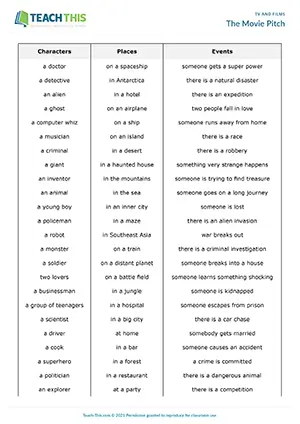
ESL Movie Pitch Activity - Writing and Speaking: Table Completion, Writing a Story Outline, Writing and Presenting a Dialogue - Group Work
In this free presenting a movie pitch activity, students create a plot for a film by choosing characters, places and events from a worksheet. Students then...
The Oscars
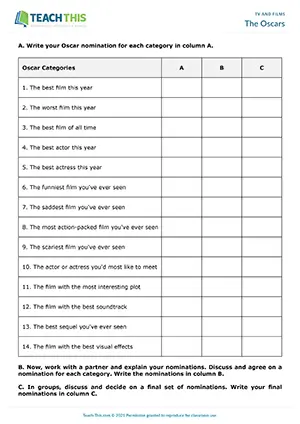
ESL Film Awards Discussion - Speaking Activity: Expressing Opinions, Agreeing and Disagreeing, Answering Questions, Freer Practice - Pair and Group Work
In this intriguing film awards discussion activity, students discuss and make nominations for the Oscars. To begin, students write their Oscar...
TV Taboo
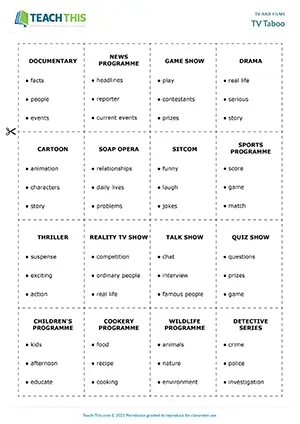
ESL Describing TV Programmes Game - Vocabulary and Speaking: Describing, Guessing - Group Work
In this creative describing TV programmes game, students describe and guess different types of TV programmes. In groups, students take it in turns to describe a type of TV programme on a card to the...
Film Vocabulary Dominoes
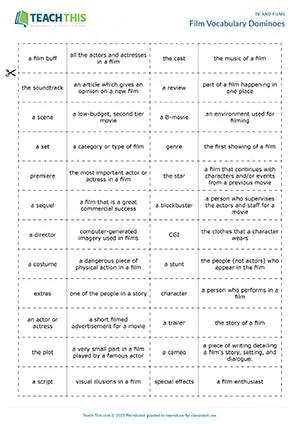
ESL Film and Cinema Game - Vocabulary: Matching - Group Work
In this memorable film and cinema vocabulary game, students play dominoes by matching film-related words with their definitions. The first player puts a domino down either before or after the domino on the table, making sure their film-related word or...
Using TV and Film Vocabulary
TV and film vocabulary helps students identify programme types, describe stories and express opinions about what they watch. It gives them the language to explain preferences, recommend films and make viewing plans with others.
This page contains 14 resources from elementary (A2) to advanced (C1), including two free downloads. The materials cover genres, TV schedules, film reviews, production roles and discussions about viewing choices.
Group vocabulary by what students need to communicate, then model it in short sentences before asking for longer descriptions.
| Purpose | Vocabulary and phrases | Example |
|---|---|---|
| Identify a genre | comedy, thriller, documentary | 'It is a documentary about wildlife.' |
| Describe a story | plot, character, be set in | 'The story is set in a small village.' |
| Discuss people involved | actor, director, cast | 'The cast includes several new actors.' |
| Express an opinion | entertaining, predictable, moving | 'The ending was predictable, but the acting was excellent.' |
| Find a programme | channel, start, be on | 'What channel is the programme on?' |
| Recommend something | recommend, worth watching | 'I recommend this film because the story is moving.' |
How to Use TV and Film Vocabulary
Connect genres with familiar examples: Ask students to match genre words with descriptions and suggest a film or programme for each one. Accept different examples where students can explain their choice, since a film may belong to more than one genre.
Develop opinions beyond 'good' and 'bad': Separate opinions about the story, acting and ending. Give students a sentence frame such as 'The acting was convincing because...' so they can support an adjective with a specific reason.
Make discussion accessible: Let students choose films or programmes they know, including ones in their own language. Encourage a short explanation of the story so classmates can join the conversation without having watched the same title.
3-Step Framework for Teaching TV and Film Vocabulary
For intermediate students, move from recognising vocabulary in a model to making recommendations and asking follow-up questions. Select the relevant stages from the page's resources across lessons rather than trying to complete every task in one session.
1. Establish meaning in context: Students match sentence halves to form definitions of film vocabulary, then read a short review and answer questions about it. Ask them to identify language describing the genre, story and opinion before producing their own examples.
2. Explain viewing preferences: Students note a film they enjoyed for different genres, then discuss their choices with a partner using the supplied language. Each student recommends two titles. Encourage a reason for each recommendation so vocabulary supports a clear message.
3. Extend the conversation: Students prepare yes/no questions about films and TV, then interview classmates. After a positive response, they ask a follow-up question and record the answer. Reporting their findings shifts the focus from naming titles to listening and discovering more about other people's viewing experiences.
Common Mistakes with TV and Film Vocabulary
Confusing the viewer's feeling with the film's effect: Use 'bored' for how someone feels and 'boring' for something that causes that feeling. Incorrect: 'I felt boring during the film.' Correct: 'I felt bored during the film.' Alternatively, say 'The film was boring.'
Using the wrong pattern after 'recommend': Follow 'recommend' with a noun, an '-ing' form or a clause. Incorrect: 'I recommend to watch this film.' Correct: 'I recommend watching this film.' Students can also say 'I recommend this film.'
Common Questions About Teaching TV and Film Vocabulary
What game helps students practice TV vocabulary?
The game TV Taboo asks students to describe types of TV programmes without naming them or using two of the three listed clue words. Classmates listen and guess the programme type to win cards. The restrictions encourage students to explain meanings using alternative words rather than repeat a definition.
What lesson can I use for teaching film vocabulary?
The lesson Talking about Films introduces film genres through definition matching and familiar film examples. Students answer questions about a favourite film, describe actors and discuss films using prompts. They finish by agreeing which film to see at the cinema, giving the vocabulary a practical role in a group decision.
What free activity helps students practice talking about films?
The free activity Movie Conversation Questions combines question-word practice with a partner discussion about films. Students first complete a set of questions using words from a box, then exchange questions with someone from the other group. Reporting what they learned gives students a reason to listen to their partner's answers.
Become a Teach This Member
Get unlimited access to the full library, plus new resources added every week.
Unlimited Resource Access
Download from 3000+ worksheets, activities, and games.
Save 5+ Hours Weekly
Cut lesson prep time with ready-to-use resources, plus teacher notes and answer keys.
Trusted Professional Quality
Classroom-tested, editable resources created by experienced ESL professionals.
Fresh Content Weekly
Get 5 new resources added to the library each week.
Here's what our members are saying...


