
Reading Comprehension ESL Worksheets & Activities
A Tale of Two Cities
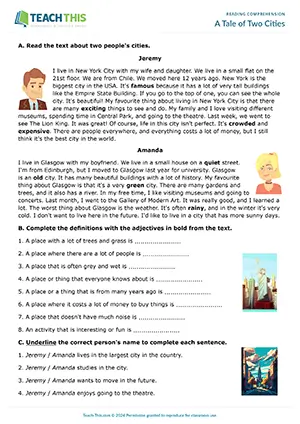
ESL Reading Comprehension Worksheet - Reading Exercises: Gap-Fill, Binary Choice, True or False, Answering Comprehension Questions - Speaking Activity - Pair Work
In this cities reading comprehension worksheet, students read a text about two people's cities and then complete comprehension exercises...
A Tale of Two Homes
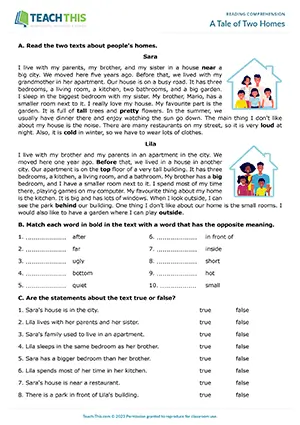
ESL Reading Comprehension Worksheet - Reading and Writing Exercises: Matching, True or False, Gap-fill, Answering Comprehension Questions
In this useful reading comprehension worksheet, students read about two homes and then complete a series of comprehension exercises. First, students...
Let's go out!
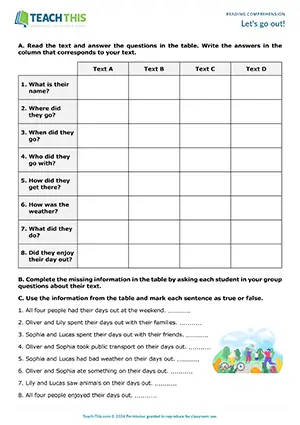
ESL Reading Comprehension Activity - Reading and Speaking: Jigsaw Reading, Information Gap, Asking and Answering Questions, True or False - Group Work
In this jigsaw reading comprehension activity, students read texts about people's days out, ask and answer questions about the texts, and complete comprehension...
A Day in the Life
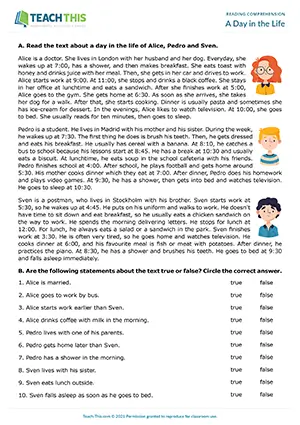
ESL Reading Comprehension Worksheet - Reading and Writing Exercises: True or False, Gap-fill, Short Answer Questions
In this free present simple reading comprehension worksheet, students read a passage about a day in the life of three people and then complete a series of comprehension exercises. Students begin by...
Can I ask a favour?
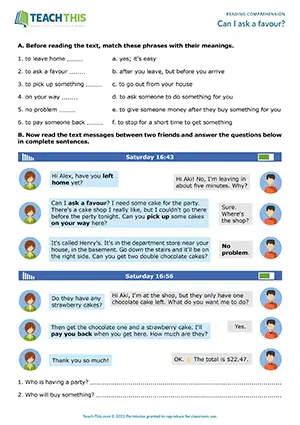
ESL Reading Comprehension Worksheet - Reading Exercises: Matching, Short Answer Questions, Multiple Choice, Gap-fill - Speaking Activity: Discussion - Pair Work
In this online chat reading comprehension worksheet, students read an online chat between two friends, Aki and Alex, and answer comprehension...
People and their Pets
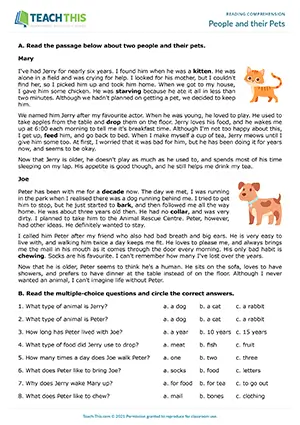
ESL Reading Comprehension Worksheet - Reading Exercises: Multiple Choice, Matching, Gap-fill, Short Answer Questions
In this pets reading comprehension worksheet, students read a passage about two pets and then complete several reading comprehension exercises based on the text. First, students read a text...
Two Holidays
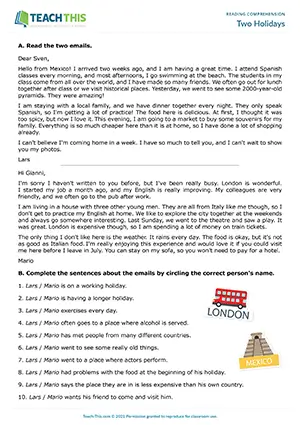
ESL Reading Comprehension Worksheet - Reading Exercises: Multiple Choice, Matching, Short Answer Questions - Speaking Activity: Freer Practice - Pair Work
In this holidays reading comprehension worksheet, students read two emails and answer a series of comprehension questions about them. Students start by...
Two Jobs
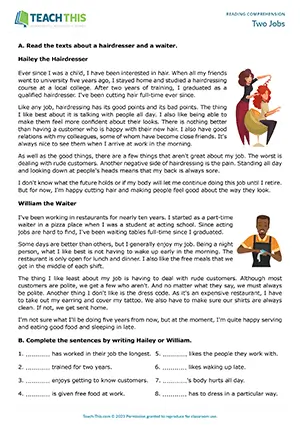
ESL Reading Comprehension Worksheet - Reading Exercises: Gap-fill, Matching, Comprehension Questions - Speaking Game: Describing, Guessing - Group Work
In this free jobs reading comprehension worksheet, students complete a series of comprehension exercises about a text describing two jobs and then...
Unusual Fears
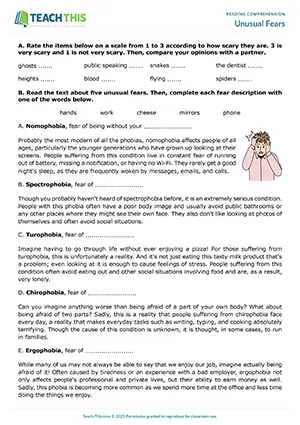
ESL Reading Comprehension Worksheet - Reading Exercises: Gap-fill, Matching, Answering Comprehension Questions - Speaking Activity - Pair Work
In this fears reading comprehension worksheet, students read a text about unusual phobias and then complete comprehension exercises about the text...
The First Americans
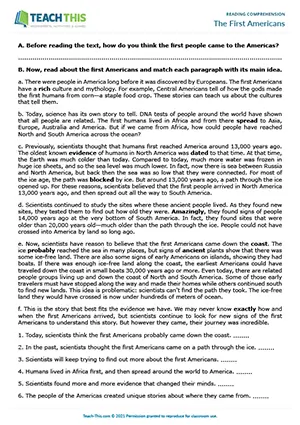
ESL Reading Comprehension Worksheet - Reading and Vocabulary Exercises: Matching, Identifying, Reading Comprehension Questions
In this comprehensive reading comprehension worksheet, students read about the first Americans and answer comprehension questions about the text...
The Great Hot Drinks Debate
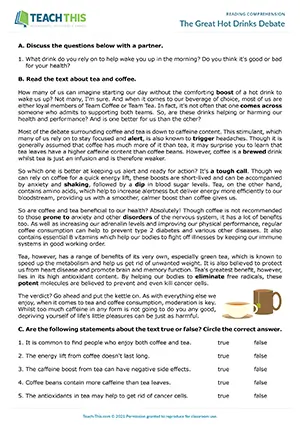
ESL Reading Comprehension Worksheet - Reading and Vocabulary Exercises: True or False, Matching, Gap-fill, Reading Comprehension Questions
In this insightful reading comprehension worksheet, students read a text about tea and coffee and complete a series of reading comprehension exercises...
The Secret Life of Mosquitoes
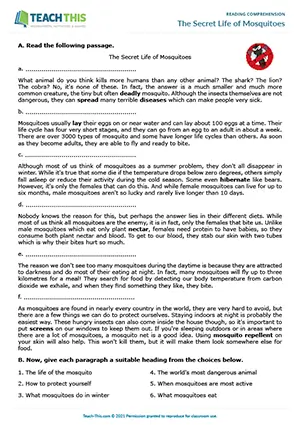
ESL Reading Comprehension Worksheet - Reading and Vocabulary Exercises: Labelling, Multiple Choice, Matching, Reading Comprehension Questions
In this productive reading comprehension worksheet, students read a passage about mosquitoes and then complete a number of reading comprehension...
Teaching Reading Comprehension
Reading comprehension involves understanding a text's overall message, finding relevant details and connecting ideas. Teaching students to explain how the text supports their answers helps distinguish understanding from guessing or copying.
This page contains 12 resources from elementary (A1-A2) to upper-intermediate (B2), including two free downloads. The materials include everyday descriptions, messages, emails and factual texts, with vocabulary work, comprehension questions and follow-up tasks.
Choose a reading purpose before setting a task so students know what information to look for.
| Reading purpose | What students do | Example prompt |
|---|---|---|
| Understand the main idea | Identify the central message without collecting every detail | 'Which heading best summarises this paragraph?' |
| Find specific information | Locate a name, place, time or other requested detail | 'Who works at the hospital?' |
| Read for detail | Check exactly what the text says about an event or situation | 'What does the writer do after work?' |
| Understand vocabulary in context | Use the surrounding sentence to work out a word's meaning | 'Which meaning fits this word here?' |
| Support an answer | Identify the information that justifies a response | 'Which part of the text supports your answer?' |
| Express understanding | Give an accurate answer using their own wording | 'Explain the reason in one sentence.' |
How to Develop Reading Comprehension
Separate the first reading from detailed work: Give students one broad question before they read, then return to the text for specific information. This makes the first reading manageable and gives later rereading a clear purpose.
Teach selective vocabulary support: Explain words that are essential to understanding the task, but leave suitable words for students to infer from context. Ask them to check whether a proposed meaning makes sense in the sentence.
Make evidence part of feedback: When checking answers, ask students to point to the relevant passage and explain the connection. For a false statement, have them correct the information rather than simply change the label.
3-Step Framework for Teaching Reading Comprehension
Use a preparation, reading and response sequence. The examples below come from the page's pre-intermediate resources and illustrate stages to use across lessons, rather than three complete worksheets to finish in one sitting.
1. Prepare essential language: Begin with phrase-and-meaning matching before reading an exchange of messages. Ask students to use the matched meanings to interpret the phrases in context. This gives them enough language support to approach the text without translating every word.
2. Check understanding against the text: Use a short passage with multiple-choice questions, sentence completion and answers written in students' own words. Ask students to locate supporting details before answering. Moving between these response types helps reveal whether they understand the information beyond recognising a familiar word.
3. Connect reading with a response: After students read holiday emails and answer comprehension questions, have them put words in order to form questions and discuss their own holidays. Keep the text-based answers separate from personal responses so students can distinguish what they read from what they contribute.
Common Mistakes with Reading Comprehension
Choosing an answer from one matching word: A familiar word in an answer option does not prove that the whole statement matches the text. Incorrect approach: Selecting an option because it repeats a word from the passage. Better approach: Read the complete statement and check who did what, when and why, including any negatives.
Replacing textual evidence with personal knowledge: A plausible answer may still be unsupported by the passage. Incorrect approach: Giving a reason that seems likely but is not stated or supported. Better approach: Base the answer on the text and use personal ideas only when the question asks for an opinion or connection.
Common Questions About Teaching Reading Comprehension
What activity combines reading comprehension and speaking practice?
The activity Let's go out! uses a jigsaw reading task about people's days out. Students read different texts and record key details, then form new groups to exchange information through questions and answers. Completing a shared table gives each student a reason to understand and explain their own text.
What free worksheet can I use for teaching reading comprehension?
The free worksheet A Day in the Life follows three people's daily routines. Students check statements, identify who each detail refers to and answer questions in their own words. They then write about their own day and compare it with a partner, connecting the reading with a familiar personal topic.
How can I teach students to identify the main idea of a paragraph?
The worksheet The Secret Life of Mosquitoes asks students to match paragraphs with suitable headings before answering multiple-choice questions. They also match vocabulary with definitions and write answers in their own words. The heading task focuses attention on each paragraph's overall message before students work through more detailed comprehension checks.
Become a Teach This Member
Get unlimited access to the full library, plus new resources added every week.
Unlimited Resource Access
Download from 3000+ worksheets, activities, and games.
Save 5+ Hours Weekly
Cut lesson prep time with ready-to-use resources, plus teacher notes and answer keys.
Trusted Professional Quality
Classroom-tested, editable resources created by experienced ESL professionals.
Fresh Content Weekly
Get 5 new resources added to the library each week.
Here's what our members are saying...


